F/A-20C Tigershark
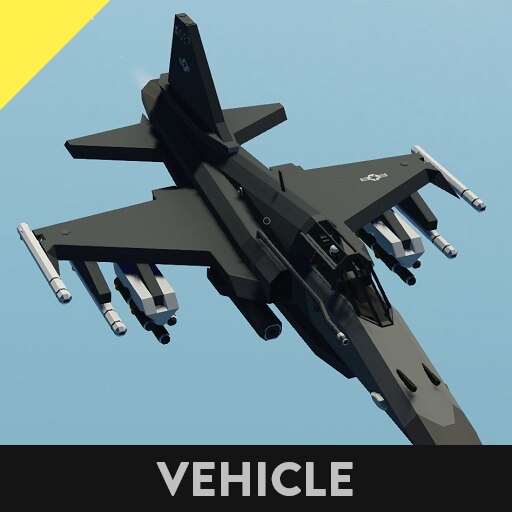
The Northrop F-20 Tigershark was a supersonic light fighter designed for the Fighter Export (FX) program in the early 1980s to replace the older F-5E Tiger IIs still in service around the world. It competed directly against the F-16/79, a cut-down variant of the early F-16A. It was faster, lighter, more maneuverable, cheaper, easier to maintain, and more reliable than the F-16, and was capable of Beyond Visual Range (BVR) missile employment using the AIM-7 Sparrow missile. It was marketed to the US Air National Guard as well for these reasons. 3 Prototypes were built and flown, and was shaping up to be a huge foreign and domestic success. However, changes in US policy made the full F-16A available for export. Countries canceled their orders for the F-20 in order to jump at the opportunity to buy F-16s, even if it meant spending significantly more money. The F-20 program was killed by this, along with significant political lobbying. A single F-20 prototype remains at a museum in California, and is one of the most popular "what-if" aircraft in the world.
This version is based on a theoretical upgraded C variant of the original Tigershark if it had been put into production and accepted into US Air National Guard service, with a fixed air-to-air refueling probe, and the AN/AAQ-13 and AN/AAQ-14 LANTIRN system navigation and targeting pods mounted under the air intakes.
This started off as a simple modification of my old F-5E fighter to be a single engine, but evolved into a full gutting and rebuild of a majority of the aircraft and it’s systems. I spent a long time getting this to where I was happy with it, so I hope you enjoy it.
- Top speed of 240kts
- Auto-pilot and altitude hold systems
- Pitch and roll stabilizers
- 10 Bombs, with ripple or single release function
- 4 Air-to-air missiles
- 2 Light auto-cannons
- Radar, Radar Warning Receiver (RWR), and chaff systems

- Start-up
- Battery / Engine Start
- Parking Brakes
- Canopy Close
- Enable RWR (red square)
- Enable Radar (red square)
After take-off
- Landing Gear
- Master Arm
- Arm Bomb Pylons
- There is a fuel hose connector on the bottom of the fuselage to refuel both the internal and external fuel tanks.
- There are battery chargers when the engine is on. There is an electric cable connector on the bottom of the fuselage if the battery is low on the ground.
- The plane can’t fit the giant drums this game uses for ammo storage for the auto-cannons. They only work if you enable unlimited ammo.
- The landing flaps work well for smooth, low speed landings at about 60% throttle.
- The altitude hold system will automatically hold at 2000ft if no altitude is entered into the keypad first as a safety feature, or if an altitude is entered of less than 50ft. 50ft is the lowest the system will hold.
- Holding the bomb release button will ripple at 1 second intervals. Or, press the button repeatedly for single releases.
- The bomb storage racks will automatically jettison once all bombs are released, or if the jettison button is pressed when the Master Arm Switch is enabled.
- Jettison the bomb pylons and the external fuel tank if using in a pure air-to-air role for better speed and maneuverability.

