Shenyang J-8

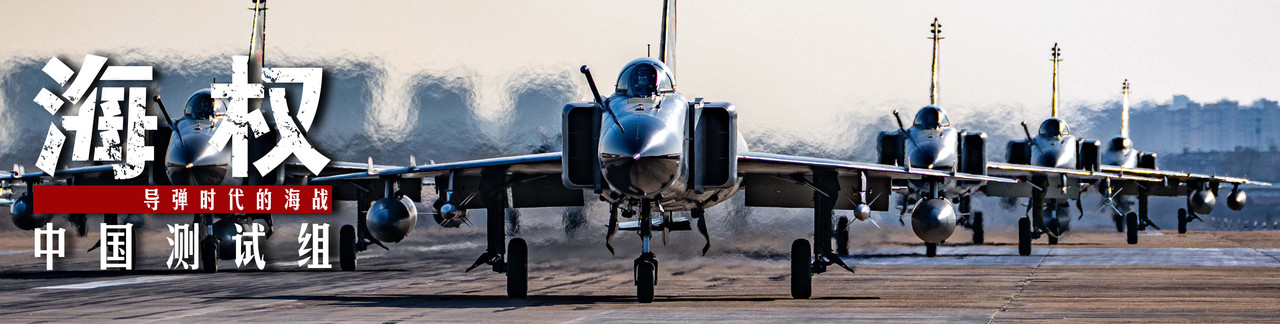

The J-8 is China’s first independently developed high-altitude, high-speed interceptor aircraft, designed by the Shenyang Aircraft Corporation of AVIC. It served for the PLAAF and PLANAF from the 1980s to the early 21st century.
From Zero to One
In 1965, following production of the J-7 based on MiG-21F-13, China decided to independently develop an high-altitude, high-speed interceptor. This new fighter was named the "J-8". The aircraft features a nose air intake, twin engines, a single-seat cockpit, and a delta-wing configuration, offering exceptional high-altitude and high-speed performance. The J-8 prototype first flew in 1969 and entered service in 1980.
During the development of J-8, China’s aviation industry faced significant challenges due to its limited technological capabilities. The design team overcame issues such as the lack of a 1:1 supersonic wind tunnel testing facility, insufficient structural strength for static load tests, transonic buffeting, and dual-engine flameouts at high Mach numbers. By 1985, they had resolved all flight quality issues across flight envelope, achieving the target performance parameter of a service ceiling at 20,000 meters and a maximum speed of Mach 2.2 in level flight.
From Obsolescence to A New Life
The development of the basic J-8 model spanned nearly 30 years. During this period, global fighter design underwent dramatic changes. The J-8’s initial emphasis on high-altitude, high-speed interception capabilities no longer met the demands of modern air combat. Starting in 1980, China began developing a new air superiority fighter based on the J-8, capable of all-weather, BVR combat, with improved mid-to-low altitude manoeuvrability, and the ability to contest air superiority with enemy fighters. This effort ultimately led to the creation of the J-8II series.
All variants of the J-8II series feature a side air intake, enhancing flight performance, and are equipped with advanced radar and avionics systems, enabling them to carry semi-active radar-homing air-to-air missiles. Throughout the development of the J-8II series aircraft, China’s aviation industry mastered key technologies such as digital fly-by-wire control systems, aerial refuelling, MIL-STD-1553B data bus, pulse-doppler radar, and active radar-homing medium-range air-to-air missiles.
Over the course of its 40-year development, China’s aviation industry successfully developed both high-altitude, high-speed interceptors and third-generation multirole air superiority fighters based on the J-8 platform. The J-8 stands as a testament to the evolution of China’s aviation industry from imitation to independent development. The J-8 is a landmark in the history of China’s aviation industry, providing invaluable experience for the development of subsequent fighter aircraft.

- Accurate exterior and livery designs
- Accurate models and textures for air-to-air and air-to-ground munitions
- Reasonable weapon performance
- Full descriptions of weapons and munitions
J-8E
The early models of J-8 were designated as "J-8 Day Fighter", as they lacked a usable fire-control radar. In 1985, the J-8A, equipped with China’s first domestic fire-control radar, the SL-4 radar, was adopted. However, due to the SL-4 radar’s outdated performance and the discontinuation of the PL-2B IR missile production, only 31 J-8A air frames were manufactured. In 1992, the J-8E, featuring the JL-7A radar, a new fire-control computer, and an off-axis missile launch control system, equipped with the PL-5 infrared air-to-air missile, made its first flight. This marked the final and most combat-capable variant of the basic J-8 series.
J-8B
As the first variant of the J-8II series, J-8B began development in 1988 and entered service in 1995. It was equipped with the WP-13A engine, a heads-up display (HUD), an air data computer, and the SL-5A single-pulse fire-control radar. Its most potent air-to-air weapon was the Italian Aspide SARH missile, later replaced by the domestic PL-11 missile. The J-8B was China’s first fighter with initial beyond-visual-range (BVR) combat capabilities, though it lacked look-down/shoot-down capabilities. The aircraft could also carry PL-5 and PL-8 infrared air-to-air missiles and unguided ground attack munitions.
J-8F
In 1985, China and the United States reached a cooperation agreement (known as the "Peace Pearl" program by the U.S. and "Project 82" by China). Under this agreement, China funded Northrop Grumman to provide advanced avionics and radar systems for upgrading the J-8II, including the AN/APG-66(V) pulse-doppler radar, multifunctional display systems, MIL-STD-1553B data bus, fire-control computers, and inertial navigation systems. The cooperation was suspended in 1989, and Grumman delivered two modified "Project 82" prototypes to China in 1992 as per contract. Building on the cooperation of "Project 82", China began developing the J-8III (also known as the J-8C) in 1991. It was equipped with domestic advanced digital avionics and a pulse-doppler radar, paired with a new generation of active radar-guided medium-range air-to-air missile. However, due to the frequent safety issues of the new WP-14 engine, the project was terminated in 2002.
The J-8F was developed based on the J-8B, incorporating the achievements of the J-8III. It first flew in 2000 and entered service in 2002. It featured the WP-13B engine, the domestically developed Type 1492 pulse-doppler radar, and digital integrated fire-control systems. The aircraft was capable of carrying the PL-12 active radar-guided medium-range missile for multi-target BVR engagements. It could also carry precision-guided munitions for ground attack.
JZ-8F
The JZ-8F is a tactical reconnaissance aircraft developed from the J-8F. It removed the cannon in the fuselage and installed digital optical reconnaissance equipment, with the ability to carry infrared cameras and synthetic aperture radar (SAR) pods. The aircraft could also be equipped with electronic intelligence (ELINT) and signals intelligence (SIGINT) pods, giving it some strategic intelligence-gathering capabilities. In addition to reconnaissance missions, the JZ-8F could also carry air-to-air missiles. The JZ-8F first flew in 2006 and became the primary high-altitude, high-speed tactical reconnaissance aircraft for the PLAAF.

- Excellent high-altitude and high-speed performance
- Moderate combat range
- Short-range infrared air-to-air missiles as primary armament (J-8E, J-8B)
- Later variants feature superior sensor performance and beyond-visual-range combat capabilities (J-8F, JZ-8F)
- Diverse payload options

- PL-5C Short-Range Infrared Air-to-Air Missile (all-aspect)
- PL-8B Short-Range Infrared Air-to-Air Missile (all-aspect)
- Aspide-1A Semi-Active Radar-Guided Air-to-Air Missile
- PL-12 Active Radar-Guided Air-to-Air Missile
- 90-I Armor-Piercing Aircraft Rocket and Rocket Pod
- 250-Ⅲ Low-Drag General-Purpose Bomb
- 500-Ⅲ Low-Drag General-Purpose Bomb
- LS-6 500kg GPS-Guided Glide Bomb
3D Model Source:
“Shenyang J-8II/B”
沈阳歼-8II/B – 下载 Rhine_Lab_Muelsyse 的免费 3D 模型 (@Rhine_Lab_Muelsyse) [1c122a7]
by Rhine_Lab_Muelsyse under CC BY 4.0
Need SeaLifter
Model Adjustments & Textures: @misasa@Texas_the_Omertosa@SqnLdr_chuishan @Type01パン
Produced by Sea Power China Beta Testing Team.
Revisions:
Old revisions of this mod are available below. Click the link to download.

